-
By Randall C. Resch
A six-year tower wanted to be his company’s next supervisor, noting, “I’m the best candidate we’ve got for the position,” while describing his fellow drivers as “…a bunch of incompetent twits!”
He asked if I’d share some direct “pointers” on what it takes to be considered for a supervisory position. The company he worked for was considering hiring a driver manager, either from within or through an outside search.
Having worked for a competitor, I remembered him as a tower with better-than-average industry skills and one who always displayed a noticeable superiority complex. He was always ready to work and had all the equipment expected of him.
Compared to other drivers, I considered him “the exception to the rules.” He didn’t whine or complain, accepted every call assigned to him and eagerly worked past quitting time. His dispatchers loved him, and he was well-liked by the other drivers.
Although I considered him “ahead of the pack,” life was all about “him.”
Why Not Me?
As we talked, I heard his enthusiasm as he described the supervisor he’d likely become. He had ideas and visions for making the company better. His motivation was in line with a supervisory position—until he said, “The boss doesn’t freakin’ know what he’s talkin’ about!”
I felt that level of disdain could be hiding a dubious personality trait.
While I’m inclined to agree that some bosses don’t know what they’re talking about, some have still managed to build companies big enough to have employees and solid enough to stay in business. Somewhere within the boss’s “inability” to learn the industry’s nuts and bolts, he had managed some level of success running the company.
When I heard, “The boss doesn’t know what he’s talkin’ about,” I perceived an active ego that needed a lesson in reality.
So I asked if we could talk frankly about what steps might help his search. I thought I’d first address his attitude to see if that might stand in his way.
What I felt he didn’t understand was that, although his skills outpaced those of his peers, attempting to override the company owner or current management team wasn’t the path to making friends and influencing people.
Step one: “Dude, read the room and see whose name’s on the door.”
Hold the Door
I didn’t like the manner in which he rebelled against his boss’s way of doing things or the company’s rules.
I asked him, “Who are you to change the rules?” And, “What’s the possibility or potential that you’d even be considered?”
If “urge” was his driving force toward becoming a supervisor, wouldn’t becoming an owner better suit his ideas?
When considering a supervisory position, applicants have to have skills—and be skilled. Being a driver for five, ten or even fifteen years might make someone a great operator, but the responsibilities of a tow supervisor also include increased hours, interaction with employees, workload, stress and overload.
There’s so much more.
An all-around, all-inclusive supervisor should:
- Be a natural leader experienced in training and supervising others.
- Demonstrate the patience, tolerance and interpersonal skills necessary to deal with a multitude of personalities, abilities and attitudes.
- Effectively lead employees on a daily basis.
- Be experienced in handling damage claims, law enforcement contracts and all facets of business operations.
- Be ready to jump in a truck and handle calls when needed.
- Have the respect of peers and personnel.
The road to supervisor is a long process that typically comes with time and grade. When towers have abilities beyond their peers, some company owners recognize that experienced candidates have more to offer.
But all talk and no action ain’t impressive!
The ideal supervisor doesn’t hide behind a desk. It doesn’t work that way.
Humility Is Endearing
If a supervisory position isn’t openly discussed or advertised, ask the HR manager or owner for an informal sit-down. Bring a “neatly prepared resume” and humbly “sell the fact” that you’ve got something to offer.
Rest assured, a little well-emphasized ability is far different from arrogance and conceit.
Positive thinking helps demonstrate that you’re a qualified supervisor while continuing to build your industry skills. A complete resume makes for a better, well-rounded applicant. Sign up for supervisory courses and seek topic-specific industry training. Ask yourself: What makes you the better candidate?
Your work history should demonstrate the knowledge and experience needed to meet the company’s needs. And somewhere in that education and experience, an overactive ego may need to be tempered with humility.
At conversation’s end, I think he and I found some common ground. I told him that changing his attitude would better serve his chances of being selected.
I advised him to get humbled, stay motivated and not give up on himself.
I reminded him to be fully aware that it’s the boss’s name on the door, not his.
And yes, “boss is a four-letter word,” but it’s they who hold the proverbial keys.
-
Randall C. Resch
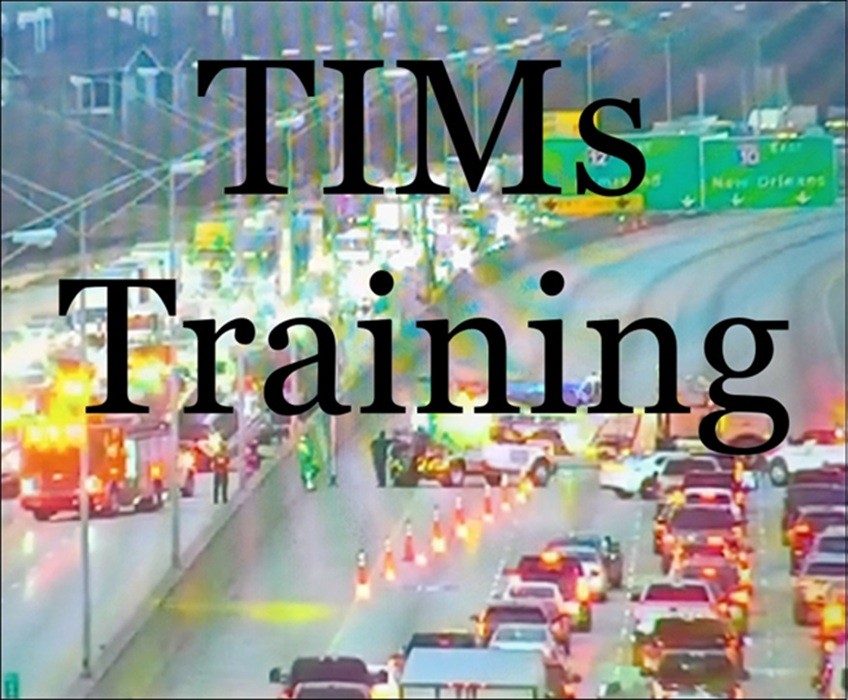
At the Texas Tow Show in July 2026, I asked a room full of owners, “How many companies sent their towers to TIM training?” Only a handful raised their hands. Considering Texas has the second-highest fatality rate of all states, you’d think TIM training would be a doable priority.
Years ago, Towman’s, Terry Abejuela and I attended the National Traffic Incident Management “Train the Trainer” course at Visalia’s Fire Department in Visalia, California. Having worked in responder industries for more than 50 years, this particular TIM course was the best safety and survival course I’ve ever attended.
Forty-eight responders attended, representing CalTrans, fire departments, law enforcement, California Highway Patrol, and seven tow companies. Having various disciplines participate together provided different perspectives on highway response as a group effort, far beyond responsibilities assigned only to tow operators.
The importance of on-scene safety was made noticeably clear by TIM instructors Ron Moore and Grady Carrick, both veteran police and fire administrators. Ron and Grady are commended for their commitment to training and dedication to a program I describe as “potentially life-saving.”
Course topics included:
- TIM Fundamentals and Terminology
- Non-Traffic Side Safety
- Notification and Scene Size-Up
- Safe Vehicle Positioning
- Command Responsibilities
- Traffic Management
- Special Circumstances
- Clearance and Termination
Training With Purpose
TIM stresses the importance of “Quick Clear” methodology, including problems caused by congestion, depleted emergency assets, secondary crashes, Haz-Mat, medical response, extrication, financial impacts, and tow and recovery.
Discussions focused on the importance of law enforcement providing accurate dispatch information to tow companies. Accurate locations and equipment needs are paramount. The intention? Towers should arrive on-scene with the proper equipment and trained operators based on a detailed assessment by law enforcement.
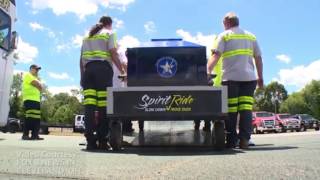
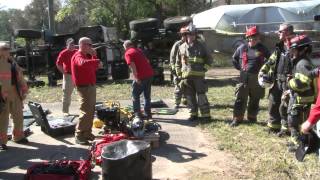
Day two’s tabletop exercises involved participants working through scenarios relating to arrival assessment, vehicle placement, Quick Clearance priorities and problem solving. Attendees also went outside for situational-awareness activities demonstrating angled and linear placement of fire trucks and arrow-board trucks, effective cone-flare patterns, and how to safely enter and exit working vehicles.
Command and Confidence
Comments by instructors and attending law enforcement officers praised tow operator abilities. I felt proud of what we towers do after seeing the total presentation on incident management. In fact, I sat with a goofy smile nearly the entire time.
TIM’s nationwide program is available to highway responders. Currently, some states require towers at all levels to attend four-hour traffic incident management courses. Accordingly, operators serving California Highway Patrol Tow Service Agreements (TSA) require a TIM certificate in the operator’s file.
Fatality numbers confirm highway responders are at great risk. Consider that approximately 12 police officers are killed monthly across the U.S., along with five fire department personnel. It’s estimated that more than 120 Public Works/Tow/DOT/Safety Patrol workers are killed each year. At the highest count, as many as 32 towers were killed in 2012 industry-wide.
Don’t listen to imprecise reporting claiming “one operator is killed every six days.” That’s bunk! However, there’s an industry expectation that through repetitive training, towers can work smarter and lower fatality numbers.
The course videos and pictures demonstrated the importance of working on the “non-traffic side” to reduce pedestrian strikes. TIM demands towers replace old highway attitudes with awareness that provides tactical advantages.
Taken to Heart
Distracted driving won’t go away. Not even all the enforcement in the world will correct or eradicate distracted driving, DUI, extreme weather conditions, excessive speeds for conditions, and other factors that create crashes and ultimately kill or maim innocent responders and towers.
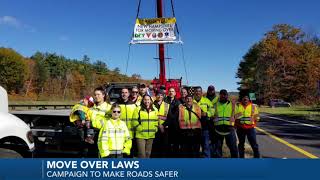
A “live-taught” TIM course, at its basic level, is outstanding training that gives towers a better understanding of the carnage caused by distracted driving. Move-Over laws don’t work alone. On-scene survival is the responsibility of every responder, regardless of position or discipline.
I urge tow company owners, tow operators and dispatch staff to attend a TIM course to fully understand processes and techniques that could mean the difference between coming home alive and not coming home at all.
A free, four-hour TIM course is available online through the National Traffic Incident Management Responder Training Program.
Operations Editor Randall C. Resch is a retired, veteran, California police officer, former tow business owner and industry advocate. As consultant and trainer, he authored and teaches tow truck operator safety courses approved by the California Highway Patrol. For 57-years, he has been involved in the towing and recovery industry. In 30-years, he has contributed more than 800-safety focused articles for American Towman Magazine, TowIndustryWeek.com and POLICE Magazine. He is a frequent seminar presenter and beauty pageant judge at tow shows. In 2014, he was inducted to the International Towing and Recovery Industry Hall of Fame, was the 3rd recipient of the industry's "Dave Jones Leadership Award," and is a member of American Towman’s Safety Committee.
Email Randy at rreschran@gmail.com.
-
By Randall C. Resch
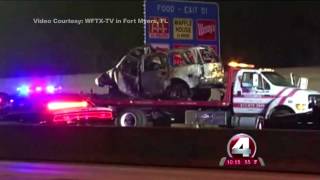
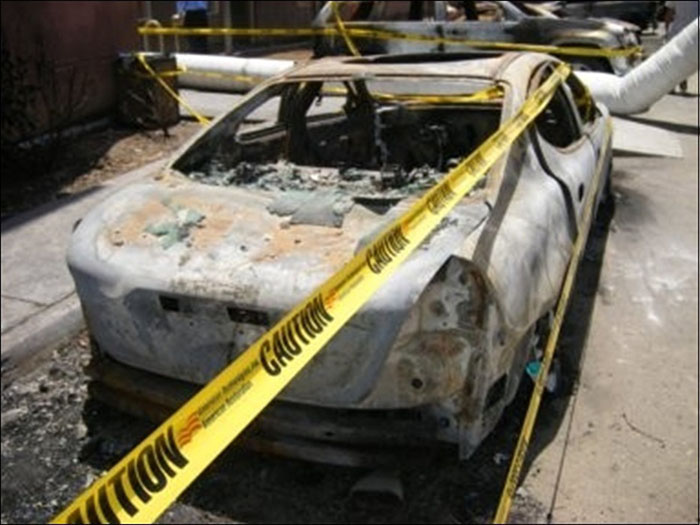
There are incidents where towed vehicles catch fire hours after being dropped off in tow yards. The question becomes: Who is responsible for damages to stored vehicles if firefighters didn't cut or remove the wrecked vehicle's battery cables?
When post-fire investigations are completed, blame often shifts from one party to another. While most towers believe disconnecting a battery belongs to the fire department, reality says it doesn't always happen. Circumstances at the scene, call priorities, or inaccessible engine compartments often prevent firefighters from disconnecting the battery.
Fires Abound
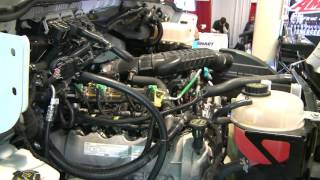
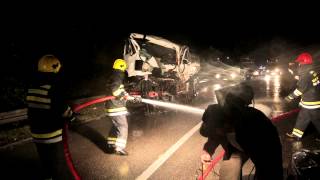
It doesn't take much for pinched wires in a damaged vehicle to create an electrical short and ignite a fire. If the vehicle is equipped with lithium batteries, impact damage can trigger thermal runaway. In either case, a single broken wire contacting the vehicle's frame can become an ignition source.
In many fender-bender collisions without injuries, the fire department may never respond. Even when firefighters are on scene, there's no guarantee they've disconnected the battery, especially if the hood is crushed shut.
When towers take possession of vehicles, they're accepting responsibility for the vehicle, its contents, and—more importantly—its condition. While no tow company intentionally causes a fire, there are known precursors every tower should recognize.
Not My Fault
Vehicle fires occur with little warning and for many reasons. Mechanical failures, damaged electrical systems, fuel vapors igniting during impact, battery failures, or heated vehicle components can all contribute. Some fires don't begin until long after the vehicle has been unloaded and parked in the storage yard.
In one incident, a tower stated, "We had just unloaded the vehicle, heard snapping sounds, turned around, and saw it burning." Another admitted, "I never looked to see if the battery was disconnected."
Once towers accept a damaged vehicle, they're also accepting responsibility for allowing it to remain in whatever condition it arrived.
Adjudicate This
Assuming the tower exercised proper care, custody, and control, a court may ask:
"Mr. or Mrs. Tower, did you take steps to disconnect the vehicle's battery before the fire occurred?"
Suppose the response is, "I didn't know the battery wasn't disconnected." That answer only demonstrates a lack of due diligence.
Tow-Related Fire Causes
Vehicle fires happen for a multitude of reasons. The following examples identify common causes:
-- Stored vehicles rarely ignite from leaking fuel alone. However, improperly placed J-hook chains have punctured fuel tanks. When leaking fuel or vapors meet an ignition source, fire or explosion becomes likely.
-- Dually equipped trucks and motorhomes towed on flat tires can generate enough sidewall friction to ignite adjacent tires, wooden truck beds, or the underside of motorhomes.
-- Vehicles parked on burning highway flares may have tires that continue smoldering during transport and eventually ignite after being stored.
-- Non-wrecked vehicles towed with the parking brake engaged can develop wheel-end fires.
Prevention
To reduce the possibility of fires during transport or after arrival at the facility, company policy should clearly dictate procedures for preventing vehicle fires.
-- Designate an isolated parking area for crashed vehicles, away from offices, buildings, hazardous-material storage, and other stored vehicles. Leave damaged vehicles there until they're determined to be cold and fire-safe.
-- Keep wrecked-vehicle storage areas accessible to responding fire apparatus and close to hydrants, hoses, water supplies, and large fire extinguishers.
-- If a vehicle is still hot upon arrival, flood both the vehicle and surrounding area with copious amounts of water until all fire potential has been eliminated.
-- If re-ignition occurs, call 911 immediately. If there are no visible flames and it's safe to do so, use a forklift or skid steer to move the vehicle into an open area.
Sooner or Later
Knowing what to do—and having a fire response plan—makes good sense.
Common sense suggests towers verify whether the vehicle's power source has been disconnected. The number-one way to lessen the possibility of a vehicle fire is recognizing existing hazards and acting accordingly. Blaming the fire department is fruitless.
Remember, if a wrecked vehicle is delivered to a body shop, dealership, or customer's home and later catches fire, the tow company will likely be blamed if the battery wasn't disconnected.
Sufficiently Covered?
Insurance coverage is broad and often complicated, depending on the services your company provides.
Does your policy cover fires that occur after vehicles have been placed into storage?
If one stored vehicle catches fire and damages others, does your on-hook or garagekeepers coverage provide sufficient protection?
In previous fire incidents, companies discovered they had no coverage because their business policy didn't specifically address fire-related losses.
Are you covered?
The Bottom Line
Owners should ask their insurance providers specific questions about post-storage vehicle fires, particularly when other vehicles or structures suffer damage from fire, smoke, or water.
Don't wait until a catastrophic fire reveals gaps in your coverage.
Towers are responsible for ensuring vehicles are loaded, towed, and stored in a fire-safe manner. One of the simplest ways to reduce fire risk is to eliminate electrical power whenever possible.
Operations Editor Randall C. Resch is a retired, veteran, California police officer, former tow business owner and industry advocate. As consultant and trainer, he authored and teaches tow truck operator safety courses approved by the California Highway Patrol. For 57-years, he has been involved in the towing and recovery industry. In 30-years, he has contributed more than 800-safety focused articles for American Towman Magazine, TowIndustryWeek.com and POLICE Magazine. He is a frequent seminar presenter and beauty pageant judge at tow shows. In 2014, he was inducted to the International Towing and Recovery Industry Hall of Fame, was the 3rd recipient of the industry's "Dave Jones Leadership Award," and is a member of American Towman’s Safety Committee. Email Randy at rreschran@gmail.com.









 By George L. Nitti