-
By Randall C. Resch
As a heavy operator working active recoveries atop rural bridges, have you ever considered the strength and integrity of the bridge itself?
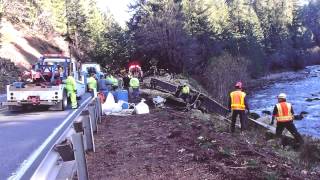
On June 13, 2026, a passenger car simply drove across a rural bridge in Northern California when the structure suddenly collapsed. Fortunately, the driver suffered only minor injuries rather than being trapped or swept away.
According to local news reports, the California Highway Patrol stated, "It's unclear at this time why the bridge collapsed." CHP also reminded motorists, "When traveling on rural roadways, remain alert to changing road and bridge conditions."
That incident serves as an important safety reminder for towers who position wreckers on rural bridges during recoveries.
For operators responding to water recoveries near or beneath bridges, I pose this question: Do you stop to consider whether the bridge will safely support the combined weight of your wrecker, casualty vehicle, and recovery forces? If a bridge can fail under the weight of an ordinary passenger car, what confidence do you have placing a fully loaded heavy wrecker on it?
Unfortunately, bridge integrity isn't a topic commonly discussed during formal recovery training or in-house instruction. While operators aren'tbridge engineers, there is one safety technique every recovery professional should practice before setting up: Have a goal—get out and look.
Wreckers Gone Fishing
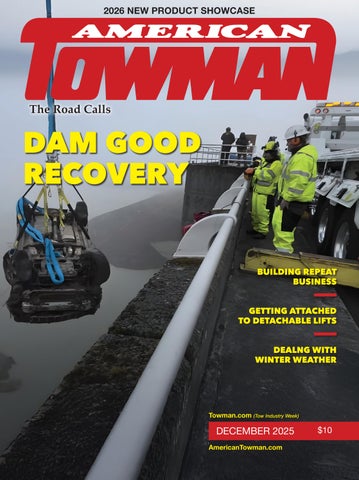
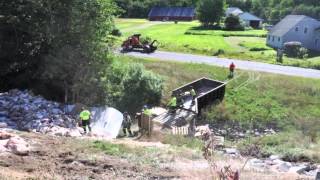
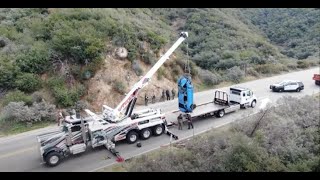
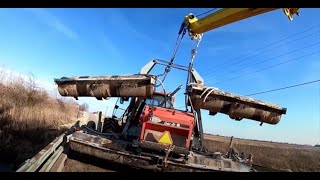
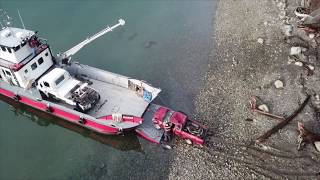
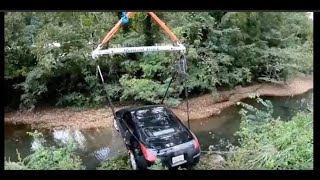
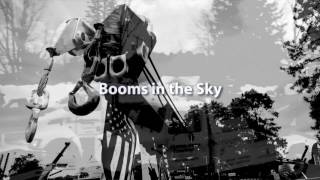
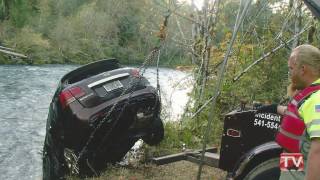
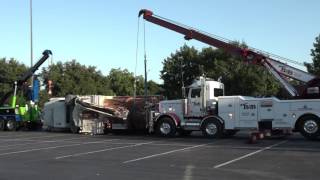
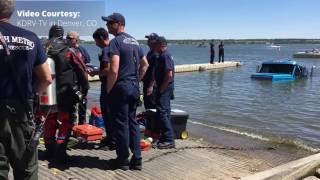
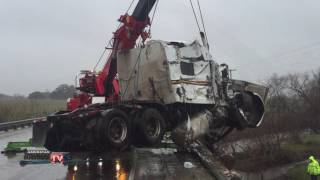
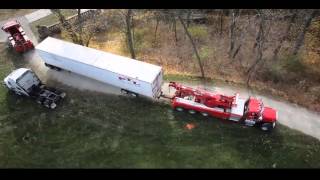
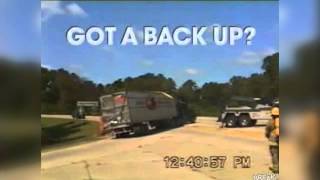
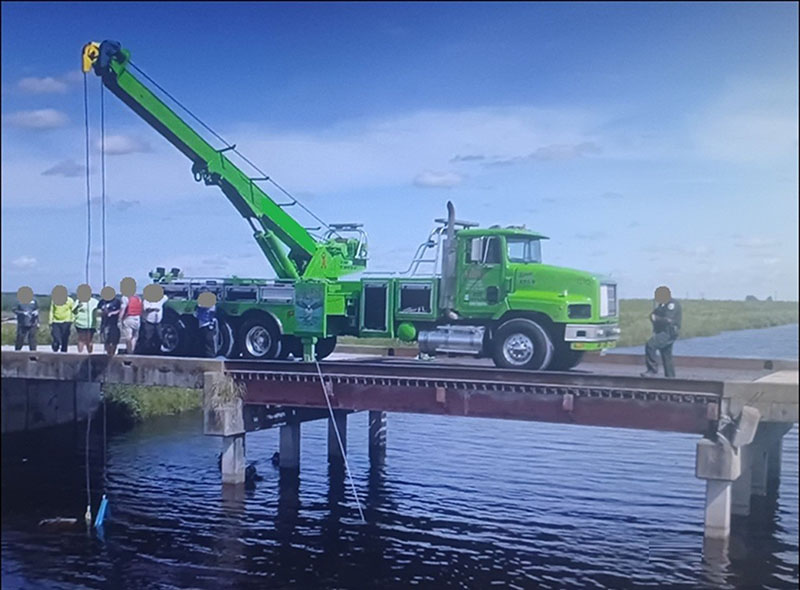
An older YouTube video showed a rotator recovering submerged vehicles from a rural waterway after a fisherman located them using a Garmin fishfinder. Law enforcement responded, followed by a dive team and heavy recovery equipment.
In cases involving submerged vehicles, investigators must determine whether the vehicles are connected to criminal activity, theft, insurance fraud, or even missing-person cases. Preserving evidence is often a priority, and it's easy for recovery personnel to become focused solely on removing the vehicles.
That's when broader scene safety can be overlooked.
Questioning Integrity
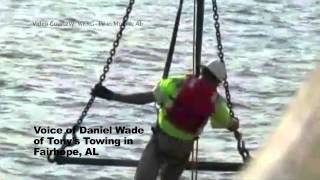
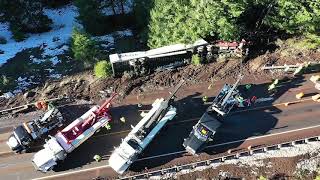
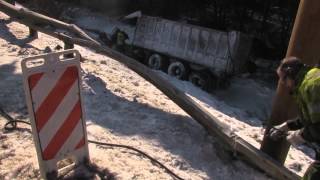
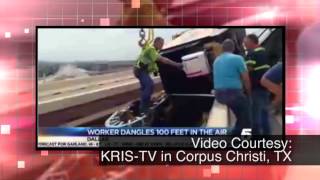
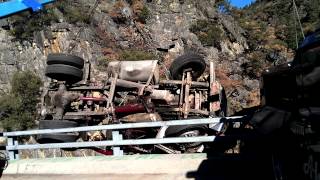
The video showed three heavily submerged vehicles being recovered individually. The rotator was positioned near the middle of a rural bridge while performing side lifts.
For just a moment, consider the total weight involved—not only the rotator itself, but also the added weight of waterlogged vehicles, recovery forces, and dynamic loading during the lift.
Several people stood beside the heavy wrecker observing the recovery. If the bridge had failed, they would have been directly in harm's way.
As I watched the footage, my "spidey senses" went off. A newer-looking steel section appeared beneath the rotator, but nearby was a large area of broken concrete only a short distance from the truck's front axle. Whether or not the damage was structural isn't the point. The question is: Did anyone stop to evaluate the bridge before committing a heavy recovery operation?
Unseen Peril
Had the bridge collapsed during the recovery, the combined weight of the rotator and suspended vehicle could have sent the truck into the water, with potentially catastrophic consequences for both operators and bystanders.
Could the recovery have been performed differently? Perhaps the rotator could have remained on solid ground and winched the vehicles up the embankment instead of positioning directly on the bridge.
That isn't meant as criticism of the crew involved. Rather, it's a reminder that recovery professionals should evaluate every available option before committing equipment to a potentially compromised structure.
See the Simple
Sometimes the simplest hazards are overlooked because all attention is focused on the recovery itself. Bridge condition should be part of every scene assessment, especially on rural roads where aging infrastructure may have unknown weaknesses.
As experienced towers, we must look beyond the casualty vehicle and identify every potential hazard before work begins. The old saying reminds us, "If you see something, say something." But first, you have to see it.
This recovery ended successfully, but it also serves as a valuable reminder. Operators can't assume that every rural bridge is capable of supporting today's increasingly heavy recovery equipment. When safety is in question, stop, assess the situation, and adjust the recovery plan accordingly.
Operations Editor Randall C. Resch is a retired, veteran, California police officer, former tow business owner and industry advocate. As consultant and trainer, he authored and teaches tow truck operator safety courses approved by the California Highway Patrol. For 57-years, he has been involved in the towing and recovery industry. In 29-years, he has contributed more than 800-safety focused articles for American Towman Magazine, TowIndustryWeek.com and POLICE Magazine. He is a frequent seminar presenter and beauty pageant judge at tow shows. In 2014, he was inducted to the International Towing and Recovery Industry Hall of Fame, was the 3rd recipient of the industry's "Dave Jones Leadership Award," and is a member of American Towman’s Safety Committee.
Email Randy at rreschran@gmail.com.
-
By Randall C. Resch
When towing or transporting limousines and motorhomes, are towers responsible for the security of personal belongings inside? Is it the tower's responsibility to ensure that loose items and appliances are secured before moving the vehicle?
The following two cases come from the "I can't believe it's true" file. Both left California tow companies liable for damages that occurred during otherwise routine impounds.
While California towers face more than their share of frivolous lawsuits, simple situations can become costly when operators aren't prepared for unexpected circumstances.
Scenario One
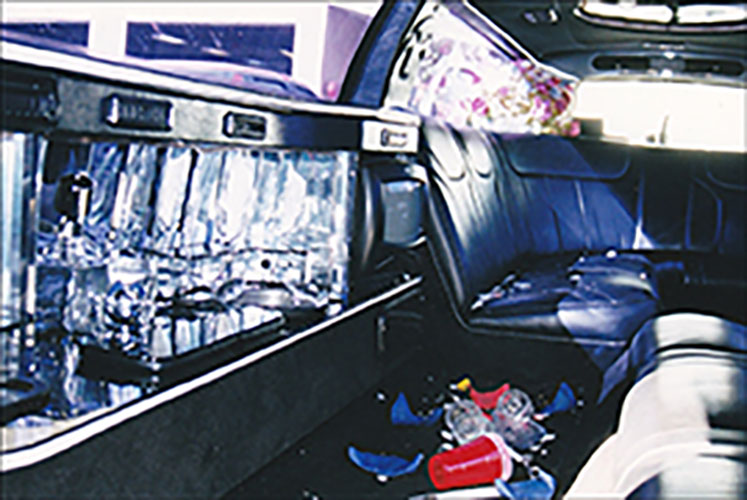
A stretch limousine was impounded for expired registration after the driver failed to produce a valid license. The vehicle was in perfect running condition, allowing the operator to drive it onto a rollback.
The tow operator signed the deputy's impound and inventory report, loaded the limousine in the usual manner, secured it with straps and ratchets, and transported it approximately nine miles to the company's storage facility without incident.
Several days later, the owner returned with a valid license and the required release from the impounding agency. Both the impound report and tow invoice described the vehicle as being in "perfect condition inside and out." Before releasing the limousine, the tow company required the owner to sign a damage release. He did so under protest.
After inspecting the exterior, the owner entered the passenger compartment and discovered extensive damage. Crystal glasses, decanters, mirrors and leather seating had all been damaged when unsecured items apparently shifted during loading or transport.
The company's manager dismissed the complaint, reportedly telling the owner, "It's a police impound. We're not responsible."
The owner filed a $5,000 small claims action, alleging negligence. Although the company argued it had no reason to know the interior contents would shift, the judge ruled in the owner's favor, citing the signed impound documentation describing the vehicle as being in "perfect condition inside and out."
Scenario Two
An abandoned Dodge motorhome filled with trash, dog waste and an overflowing black-water tank was impounded and towed by a medium-duty wrecker. During transport, an older television fell to the floor and was destroyed. The owner claimed it was a "state-of-the-art" television. When the damage claim was submitted, the tow company failed to return repeated phone calls. When contact was finally made, the owner alleged he was told, "We're not paying for your junky TV."
He filed a small claims lawsuit and was awarded $500.
Lessons Learned
These cases may seem minor, but courts often hold tow companies to a very high standard under Care, Custody and Control.
They raise several important questions:
-- Should limousines be loaded onto rollback carriers whenever possible to reduce loading angles?
-- Should operators secure loose items that are likely to shift during transport?
-- If operators enter a vehicle to secure belongings, does that expose the company to theft allegations?
-- Since impound owners usually aren't present, is a pre-tow liability release even practical?
-- How much protection does a signed release actually provide in court?
-- Can a release eliminate responsibility for preventable damage?
-- Should damage claims always be handled promptly, professionally and with empathy?
Pay the Man
Judges are quick to remind tow companies that Care, Custody and Control requires reasonable measures to prevent damage to both vehicles and their contents.
So ask yourself: What procedures do your operators follow to minimize damage to personal property during transport? Is there a practical way to identify and secure loose items before loading?
Arguably, excessive loading angles or normal transport movement caused the glasses, decanters and television to fall. But one question remains: Would either case have ended differently had the companies simply responded with professionalism and concern?
Sometimes the lesson isn't just about preventing damage. It's about how you respond after it happens.
Operations Editor Randall C. Resch is a retired California police officer, former tow company owner and longtime industry advocate. As a consultant and trainer, he authored and teaches California Highway Patrol-approved tow operator safety courses. During his 57-year career in towing and recovery, he has written more than 800 safety-focused articles for American Towman Magazine, Tow Industry Week and POLICE Magazine. He is a frequent seminar presenter, a longtime member of American Towman's Safety Committee and was inducted into the International Towing and Recovery Hall of Fame in 2014. He also received the industry's Dave Jones Leadership Award.
Email Randy at rreschran@gmail.com.
-
By Randall C. Resch
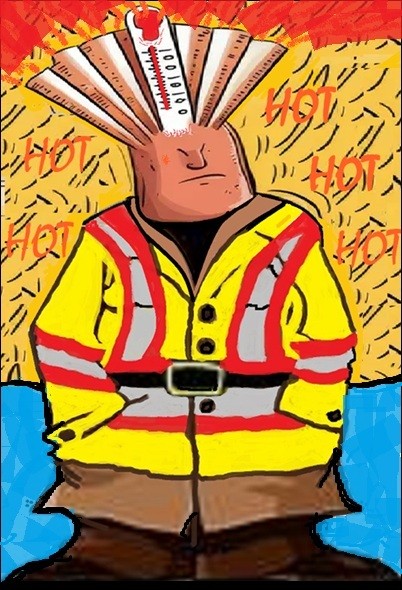
Millions of residents across California, Oregon, and Washington are under Extreme Heat Warnings as forecasters warn of dangerous and potentially lethal temperatures. Parts of Northern California are expected to reach 110°F, while areas of Oregon and Washington could see temperatures approaching 100°F. Compounding the danger are unusually warm nights that provide little relief, increasing the risk of heat-related illness for anyone working outdoors.
For tow operators, these conditions are more than a weather story—they're a workplace hazard.
Recently, I observed a tow operator working a midday embankment recovery on a rural two-lane road. A highway patrol cruiser and CalTrans pickup were parked nearby, their occupants staying cool inside air-conditioned vehicles. The tower, however, was wearing long sleeves, heavy boots, uniform pants, and an ANSI Class III vest while rigging the recovery under a blazing sun.
His face was beet red. By appearance alone, he seemed moments away from suffering a heat-related injury.
Watching him reminded me of a lesson I learned the hard way.
A Long Time Ago
As a teenage tower in the late 1960s, I lived and worked in the small gold-mining town of Julian, California. One summer day I headed to an off-road recovery in a battered Dodge Power Wagon equipped with an early Holmes 400 wrecker. The truck had a rusted hole in the floor, ran on what felt like five-and-a-half cylinders, and, of course, had no air conditioning.
I arrived at the recovery site around midday, figuring the job would take about an hour. The customer's ranch truck had gone over the side of a mountain road and come to rest nose-down among rocks and small trees. I was working alone. There were no radios, no cell phones, and, as it turned out, no water.
I spent the next hour hauling chain, cable, and a snatch block up and down the embankment, stopping occasionally in the shade to catch my breath. When it came time to winch, the old Dodge decided it needed a break too and quit running. After several minutes under the hood coaxing it back to life, my own engine gave out.
I passed out.
The last thing I remember was feeling incredibly hot. When I finally came to, I was lying face-first in the dirt, dazed and confused. My lips and teeth were coated with dust, and it took several moments before I realized what had happened.
I was dehydrated.
Listen and Learn
A recent TowForce.net forum post shared guidance from TRAA regarding the importance of hydration. One point stood out:
"Asphalt absorbs 95 percent of the sun's rays, and asphalt temperatures can easily be 30 degrees higher than surrounding air temperatures."
When towers work crashes, recoveries, and extended incidents on pavement, heat exposure can become dangerous long before they recognize the symptoms. Heat exhaustion, heat cramps, dehydration, and heat stroke can sneak up quickly.
Many operators have a "macho" mindset and don't consider themselves vulnerable to heat-related injuries. The reality is that no one is immune.
Operators must make a conscious effort to get out of the heat, seek cooler environments whenever possible, and stay ahead of dehydration. In short, workers have to hydrate while they work.
Don't be a dope like me.
Owner Responsibilities
Under OSHA Section 1910.141(b)(1)(i), employers must provide potable water in the workplace. While tow operators don't work from a fixed location, owners should ensure that drivers have ready access to drinking water during their shifts.
A good rule of thumb is to drink at least one eight-ounce bottle or glass of water every 20 minutes when working in hot environments—not just when you're thirsty.
Simple solutions can make a big difference. Carry bottled water in a cooler. Consider using a hydration backpack during lengthy recoveries. Another inexpensive tool is a cooling towel soaked in water and worn around the neck, providing several hours of relief.
Water, Rest, Shade
Hydration is basic safety, but it's often overlooked. Employers should regularly discuss heat awareness and other weather-related hazards during safety meetings, including cold-weather emergencies, swift-water incidents, lightning, falling trees, and flood dangers.
To avoid becoming the next preventable heat-related injury, remember three simple words:
Water. Rest. Shade.