-
By Randall C. Resch
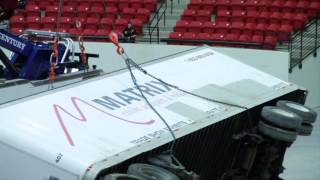
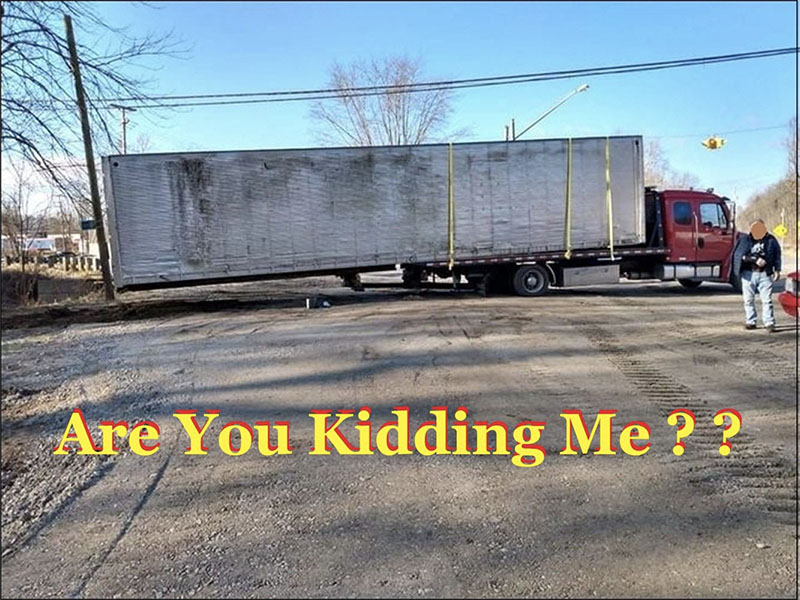
For towers loading and transporting SeaCan shipping containers, the industry has experienced several notable incidents where operators were injured or killed. For towers conducting this specialty transport niche, extreme caution and the application of best practices are key to remaining incident-free.
Based on incidents investigated by OSHA, NIOSH, and the CDC, let this narrative serve as a solid safety reminder that taking shortcuts, initiating Hollywood moves, and the misapplication of proper equipment can lead to injury or deadly results.
Although transporting shipping containers is a regular practice for tow companies and transport handlers, a routine load can go wrong when best practices aren’t followed. Three industry-related container incidents demonstrate the importance of proper safety and rigging.
Incident 1: On January 17, 2006, a tow operator at a Navy pier was working to relocate a large metal roll-off (vacuum) container weighing approximately 10,100 pounds empty. To relocate these containers in the traditional manner, they were pulled onto a flatbed carrier using 5/8-inch-diameter plow steel wire rope outfitted on the truck’s winch.
Per OSHA’s investigation, obstructions on the pier prevented the tow operator from positioning the carrier’s deck in alignment with the container for a straight pull onto the flatbed.
To load the container, the operator was alleged to have used a combination of equipment in an attempt to complete a tie-down to the container. The tie-down assembly consisted of a J-hook (rated at 5,400 pounds), a chain with a safe working load limit of 2,650 pounds, and a grab hook with a working load limit of five tons. The assembly was reportedly hooked to one side of the carrier’s deck.
With the container still on the ground, the winch wire rope was routed through the tie-down assembly and then hooked to the roll-off vacuum container. The operator threaded the wire rope through the assembly, allowing the winch to pull the container at an angle. However, he chose not to include a snatch block in the rigging.
The operator reportedly repositioned himself from the tie-down location to the opposite side of the flatbed where the truck’s controls were located. As he began winching the container, the chain section of the assembly overloaded. When it failed, the J-hook broke away and was hurled toward the operator, striking him in the head. Notably, the operator was not wearing hard-hat protection. He was transported to an area hospital, where he died from his injuries more than a week later.
Incident 2: In March 2006, a Massachusetts tow operator was loading an 18-foot metal container when the bridle chain used to pull the container broke. The chain recoiled toward the operator, striking him in the leg. He was transported to an area hospital, where he died two weeks later from blood-clot complications resulting from his injuries.
Incident 3: A western tow owner-operator responded to move a SeaCan container said to be half full. In an effort to sidestep using proper equipment, the operator reportedly attached a 5,400-pound-rated J-hook into the container’s corner eye to winch the container onto the carrier.
During the winching process, the weight of the container caused the J-hook to tip-load and partially straighten. As the J-hook straightened, it spit out from its location, causing the container to detach and fall. Standing too close to the container, the operator suffered crushing injuries when the detached container landed on his foot.
Think Safety First
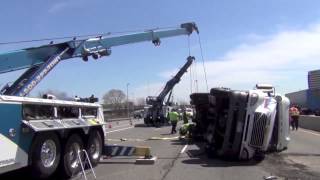
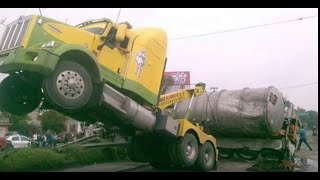
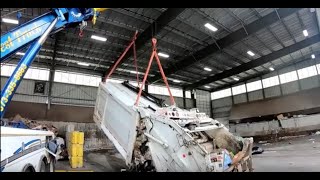
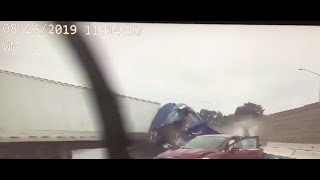
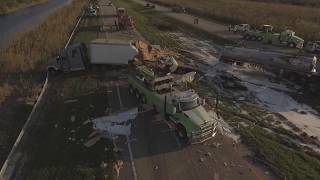
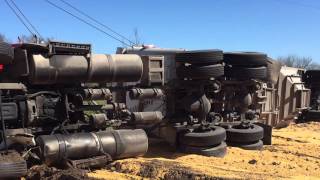
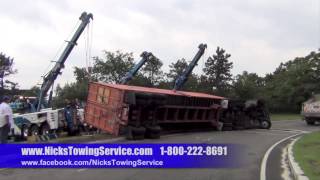
Across the U.S. and abroad, semi-trucks transporting and delivering sea containers crash all the time. Tow companies serving their state’s highway patrol often respond to these incidents. Although not overly complicated, recoveries frequently require containers to be separated from the cab and chassis. Most require lifting procedures performed by talented operators experienced in handling these types of crashes.
Especially for heavy-duty, rotator, and salvage operators, safety first is always the reigning factor in a safe and successful recovery. Towers are reminded to employ equipment specifically rated for these types of recoveries.
For tow companies attempting to load and transport containers without topic-specific training, you’re gambling with a potentially deadly disconnect or fall. Sure, it’s tempting to load a 40-foot container onto a 21-foot carrier deck, but sidestepping industry best practices for a paying job isn’t smart.
Don’t risk becoming a victim of a drop-or-detach industrial incident, an overload crash while driving, or a costly fine levied by OSHA or a police citation. It’s best to know when to say “NO” and pass the container job to an experienced and qualified tow company.
Operations Editor Randall C. Resch is a retired California police officer, former tow business owner, and industry advocate. As a consultant and trainer, he authored and teaches tow truck operator safety courses approved by the California Highway Patrol. For 57 years, he has been involved in the towing and recovery industry. Over 29 years, he has contributed more than 800 safety-focused articles for American Towman Magazine, TowIndustryWeek.com, and POLICE Magazine. He is a frequent seminar presenter and beauty pageant judge at tow shows. In 2014, he was inducted into the International Towing and Recovery Industry Hall of Fame, was the third recipient of the industry’s Dave Jones Leadership Award, and is a member of American Towman’s Safety Committee.
Email Randy at rreschran@gmail.com.
-
By Randall C. Resch
On a quiet morning, one of my drivers walked into the office clutching a bloody rag against his mouth. His upper lip was split, several teeth were loose, and despite the pain, he managed a defeated smile and said, “Boss, the jack handle got me.”
It sure did.
For tow company owners focused on risk management, incidents like these deserve attention at every safety meeting. When an operator gets injured, management should immediately review what the employee was doing, whether proper procedures were followed, and if adequate training had been provided.
A Day’s Work
Tow operators don’t need formal tow school to understand that head and face injuries are painful, costly, and often preventable. When these accidents happen, companies must honestly ask whether the operator was working safely and whether management provided proper OSHA-required training.
Today, lack of training can lead to fines, liability, and possible legal exposure. In an industry filled with hazards, topic-specific safety training is no longer optional.
Over the years, I’ve witnessed numerous injuries and fatalities in towing and recovery. Reviewing those incidents reveals valuable lessons that can help prevent repeat accidents.
For operators fortunate enough to avoid a serious head or face injury so far, the following examples highlight some of the most common dangers encountered during a normal shift.
Jack Handle Assemblies
The opening scenario involved a two-piece jack handle disconnecting and striking the operator in the mouth. Two-piece handles require operators to ensure locking knobs or spring buttons are fully engaged before moving or pulling the jack.
A quick inspection can prevent serious injury.
Dolly Lift Bars & Wrecking Bars
Dolly bars and wrecking bars must be used only for their intended purposes.
A loose dolly bar can cause severe facial injuries or head trauma if installation procedures and safety latches are ignored. Operators should always remain outside the natural arc of the lifting bar in case a latch fails or the bar slips free.
If a dolly bar escapes an operator’s grip, step away immediately to avoid being struck.
Wrecking bars, with their sharp edges and pointed ends, are designed for prying damaged vehicle components—not for lifting dollies.
Remove Snatch Blocks After Use
An experienced tower nearly lost an eye and suffered a broken jaw when a chain snatch block snagged the carrier deck during loading.
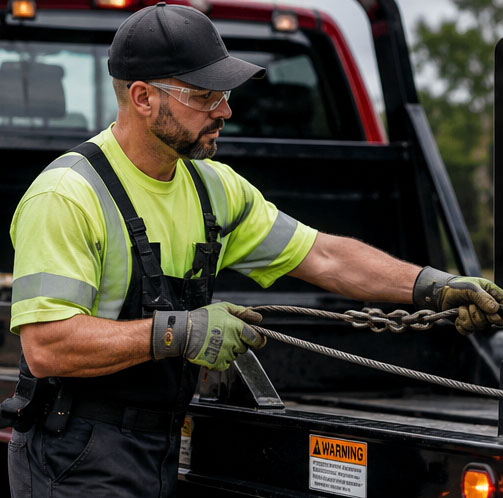
Leaving snatch blocks hanging on winch lines creates unnecessary hazards. Banjo eyes, bed components, or chains can snag unexpectedly, causing violent recoil and serious injuries to the face, chest, or arms.
Once the recovery is complete, remove and properly stow snatch blocks.
Prevent Falls from Carrier Decks
Falls from carrier decks can be deadly. In one tragic case, a 47-year-old operator died after slipping from a carrier deck.
With deck heights commonly ranging from 42 to 48 inches, even a short fall can produce catastrophic injuries. Operators should move carefully, maintain good footing, and keep decks free of tools, debris, and spilled fluids.
Good housekeeping is a critical part of safety.
Falls from Truck Cabs
A tow trainee riding as an assistant reportedly lost footing while exiting a truck cab and suffered fatal injuries from the fall.
Three points of contact should always be maintained when entering or exiting truck cabs. Operators should never jump from the cab and should first confirm traffic conditions before stepping into roadway areas.
Hands should remain free while climbing in or out of the truck.
Running During Recoveries
Many operators pride themselves on working quickly, but running at recovery scenes creates unnecessary risk.
Uneven pavement, broken glass, debris, loose equipment, and hidden obstacles can all lead to serious trip-and-fall injuries. Recovery scenes are hazardous enough without adding speed to the equation.
As the saying goes: “When speed goes up, safety goes down.”
Saving Face
No hard fall is enjoyable. If a fall becomes unavoidable, operators should protect the head and face by tucking the chin, rounding the back, and rolling through the fall whenever possible.
Attempting to break a fall with outstretched arms often results in broken wrists or arms instead.
For operators who have never suffered an on-the-job injury, consider yourself fortunate. In the towing and recovery industry, injuries are not a matter of if—but when.
This industry can hurt you. Stay alert, stay trained, and work safely.
Operations Editor Randall C. Resch is a retired, veteran, California police officer, former tow business owner and industry advocate. As consultant and trainer, he authored and teaches tow truck operator safety courses approved by the California Highway Patrol. For 57-years, he has been involved in the towing and recovery industry. In 29-years, he has contributed more than 800-safety focused articles for American Towman Magazine, TowIndustryWeek.com and POLICE Magazine. He is a frequent seminar presenter and beauty pageant judge at tow shows. In 2014, he was inducted to the International Towing and Recovery Industry Hall of Fame, was the 3rd recipient of the industry's "Dave Jones Leadership Award," and is a member of American Towman’s Safety Committee.
Email Randy at rreschran@gmail.com.
-
By Randall C. Resch
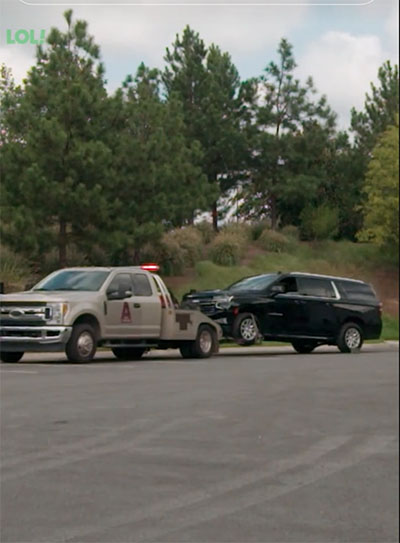
Of the year’s biggest criminal investigations, one was the high-profile kidnapping of Nancy Guthrie, who disappeared from her Tucson, Arizona home. As part of the FBI’s ongoing investigation, a Range Rover was impounded as a means to potentially discover trace DNA transferred by suspects. In California, a high-profile homicide investigated the death of a Los Angeles teen whose body was discovered in a Tesla owned by a well-known rap artist.
Because few tow companies are official “evidence contractors,” there’s no formal training towers receive on this specific niche. Let this narrative serve as simple reminders expected of operators called to evidence scenarios.
Important: Vehicles with potential evidence require “special care and handling.” Personnel must fully understand “special handling” when chain of custody demands total care and control.
High-Profile Cases & Media Attention
As what happened in the Nicole Brown Simpson case (June 1994), never remove (steal) items from evidence vehicles. Avoid urges to take “souvenirs” or face being arrested and charged with felony tampering, destruction of evidence, and possession of stolen property. If weapons, ammunition, or contraband is observed, notify the impounding agency.
For high-profile cases, a hoard of media will be at the tow location. Towers themselves will likely be filmed as the vehicle is being loaded. Work steadily, professionally and, most importantly, never make statements as they could be mistaken or misconstrued.
During kidnap, sex-crime, and human trafficking investigations, multiple jurisdictions conduct hundreds, if not thousands, of investigative hours. These cases are extremely complicated. In border towns with proximity to international borders, vehicles determined to be “potential evidence” demand specific handling, care, transport, and storage. When improper handling occurs, entire cases can be thrown out and suspects go free.
Burned Vehicles & Body Relocation
Arson fires intentionally hide evidence of crimes. Before loading burned vehicles, peek into burned spaces knowing burned corpses are difficult to recognize.
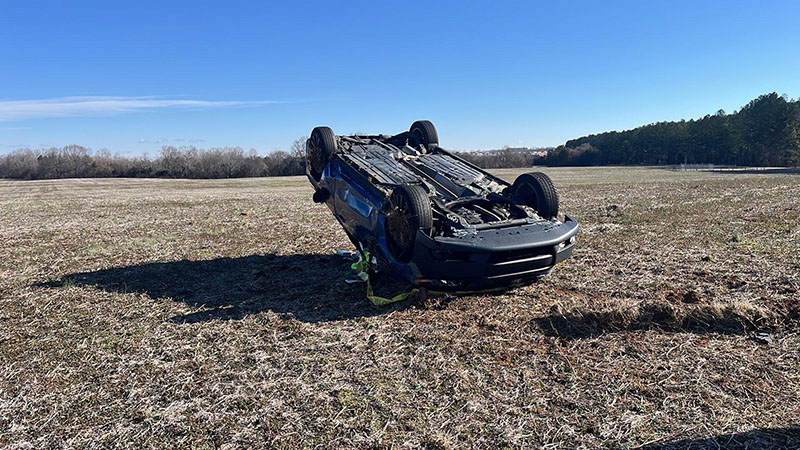
If a body is inside and you’re asked to relocate the vehicle with the body still inside, this “special request” requires a “yes” response. Our intent is to serve at the highest level possible. If tow management prohibits recovering upside-down vehicles, or moving vehicles in this manner, the company shouldn’t serve as an evidence contractor.
Agency authorizations should allow recovering vehicles upside down or moving vehicles in this manner. Evidence towers do many things beyond the norm at the IC’s request with no hesitation.
Relocation may be necessary due to:
• Officer safety from an unruly crowd
• To protect the dignity of the deceased
Tow personnel aren’t authorized to cover or tarp a deceased person in an attempt to shield citizens from viewing a corpse. Covering the body may alter or contaminate valuable evidence. If a body is covered by police investigators or CSI techs, it becomes part of their crime scene.
Common Evidence Scenarios
Towers should know the nature of the investigation first so they can best hook up or transport the evidence vehicle without touching surface locations containing evidence.
When pedestrians are struck and the victim’s body goes under the suspect vehicle, it leaves bits of clothing, fibers, hair follicles, skin and bone fragments, blood, and other trace evidence. Fabric abrasions, marks, or torn material caught underneath are critical pieces of evidence.
When pedestrians are struck and the victim’s body goes over the suspect vehicle, evidence is likely left on the bumper, grill, hood, windshield, or windshield frame. Trace evidence includes fibers, skin and bone fragments, blood, and paint chips. Fabric abrasions or torn materials are commonly found on the vehicle’s surfaces.
Where pedestrians are struck and witnesses describe the suspect vehicle driving “lights-out,” don’t turn on the suspect vehicle’s headlights. Investigators may need to determine whether headlights or taillights were illuminated at the time of impact.
Fingerprint Evidence & Professional Responsibility
Latent prints discovered during investigations are crucial pieces of evidence linking suspects to crimes. Print experts determine whether latent prints are “fresh” or “old.” Mishandled load and tow activities could destroy fingerprint evidence. Wear gloves, but don’t touch vehicle surfaces when possible. If surfaces are unintentionally touched, evidence can be destroyed.
At the onset of tow or transport requests, determine if suspect vehicles have a “Hold for Prints” and whether the vehicle will be stored indoors. Don’t roll windows up or down, which may smear latent prints. Don’t sit in the vehicle.
Never allow anyone access to vehicles without authorization. Refer inquiring parties to the investigating agency. Don’t be afraid to deny access to family members, attorneys, or news media until evidence holds are completely released.
This narrative touches only the tip of what towers should know regarding what it takes to be an evidence provider. When handling evidence tows, providers will be held to higher standards.
Listen carefully to instructions provided at the time of tow or transport. Your professionalism is required because, at some point, towers may be subpoenaed to testify regarding what actions were taken.
Operations Editor Randall C. Resch is a retired, veteran, California police officer, former tow business owner and industry advocate. As consultant and trainer, he authored and teaches tow truck operator safety courses approved by the California Highway Patrol. For 57-years, he has been involved in the towing and recovery industry. In 29-years, he has contributed more than 800-safety focused articles for American Towman Magazine, TowIndustryWeek.com and POLICE Magazine. He is a frequent seminar presenter and beauty pageant judge at tow shows. In 2014, he was inducted to the International Towing and Recovery Industry Hall of Fame, was the 3rd recipient of the industry's "Dave Jones Leadership Award," and is a member of American Towman’s Safety Committee.
Email Randy at rreschran@gmail.com.